It’s important that your body is warmed up ahead of your netball matches to reduce the risk of injury. Here are a series of netball warm-up drills that will keep your legs limber and ready for the rigours of your game.
Netball Australia are launching a new national league in 2017 and will be introducing a new tactical time out rule to matches. But how’s this for a game changer: in 2018 the league body could give a trial to a revolutionary new rule – a two point shot.
Under proposals from Netball Australia, a new two point scoring zone will be marked within the shooting circle. If a player scores while standing within this zone, their goal will be worth two points.
However it appears that fans of the game may need convincing about the new scoring system; Netball Australia surveyed fans, players and umpires and received a mixed response to the potential changes.
So it appears we still may be a way off from what would arguably the biggest game-changer to netball yet. Check out netball’s latest rule changes to see how the sport has evolved in 2016.
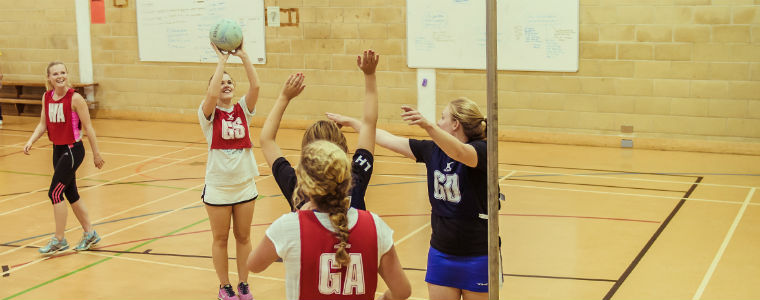
If you’re looking to get back into the sport or are looking to play the game for the first time, check out our guide to basic netball shooting technique:
Basic shot technique:
Step 1 – Footwork & Hand Position On The Ball
Get your goalpost in your line of sight. and ensure your body is balanced before you shoot – ensure your feet are roughly shoulder length apart and pare pointing toward the post.
Your dominant hand will be doing the shooting and your other one will be balancing the ball. Steady the ball with your weaker hand and place the dominant one slightly underneath with fingertips under the ball.
The holding of the ball is important. Balancing it on the fingertips of your dominant hand and steadying it with your other is the way to begin. The spring of the fingertips give the control of the ball’s spin, while the steadying hand is your main aiming tool: make sure it’s pointing the ball into the net!
Step 2 – Bend Your Knees
The power from your shot will come from the spring of your body as it elevates upwards from a slightly crouched position. With your feet shoulder width apart, bend your knees and point the ball toward the net, while keeping your head up and your eyes at the goal net.
Step 3 – Shoot
Keeping your eyes toward the goal net, Bring your hands alongside your head, then, before simultaneously springing your knees upward while moving your hands forward and up toward the net. Using your wrists, ensure the ball is flicked from your hand, at the point when your legs are straightened – this will give the ball a bit of backspin, which may work in your favour if the ball bounces on the edge of the goal ring.
Hopefully, with practice, the majority of the shots will go straight in! But always be alert for a rebound, as you may find yourself with a second chance at scoring.
The player taking the throw in must have at least one foot within 15cm (6 inches) of the line. Previously the player must have placed one or both feet immediately behind the line.
Defending a shot at goal
A defender may not deflect a shot at goal on its downward path towards the ring (this includes touching the ball up through the net. This is a new rule addition as previously this wasn’t specifically covered.
Centre Pass
The Centre must have at least one foot wholly within the centre circle before the pass is taken. This rule has been relaxed slightly as previously the Centre would have been penalised if any part of their foot was on the ground outside of the centre circle as the pass was being played.
Penalty Pass
Once a player taking a penalty pass is in the correct position, the player may choose to either play the ball immediately or wait for the infringer to stand out of play.
Previously the player taking a penalty pass had to wait until the infringer was standing out of play. A player who did not wait until the penalty was “set” was penalised.
Short Pass
When a player passes the ball there must be sufficient space for an opposing player on the court to be able to intercept the ball as it moves from the hands of the thrower to the hands of the receiver.
Delaying Play
Delaying play (either accidentally or deliberately) is considered foul play – in some cases it could affect the outcome of the match. A penalty pass is awarded and the sanction is advanced.
Contact/Contest
Players may come into physical contact with each other as long as they’re striving to claim the ball. If they do not interfere with each other’s play or use their bodies to gain an unfair advantage over their opponent, it’s deemed a fair contest and play continues.
Goal Scored/Ball Out of Court
The umpire will now signal that a goal has been scored by raising one arm vertically. The umpire will no longer blow their whistle when a goal has been scored or the ball has gone out of court.
Netball is great for building leg, upper body and core strength, while your flexibility will undoubtedly increase the more you play.
Definitely more fun than the gym
First and foremost, here at Go Mammoth, we ensure that all of our netball leagues around the country are enjoyable for all members! After each game is won or lost, the majority of our members head to our sponsor bars for a post-match drink.
Plus netball strengthens key areas of your body
Playing the sport regularly helps to build leg, upper body and core strength, while over time your flexibility will also increase playing the game. As netball is a game about throwing and catching, your hand-eye coordination will significantly improve over time playing netball.
All abilities are welcome – there’s a league for everyone at Go Mammoth!
Whether you fancy a competitive match, or just want a more leisurely recreational game, there is a league for you at Go Mammoth.
No team? No problem!
Can’t get a netball team together? Don’t worry – just sign up us as an individual and we’ll find a team for you to join (subject to availability).
Beginners welcome!
So unlike other netball clubs in London we don’t expect you to have played before or even know the rules of netball to join our leagues. Just read up on the basics netball rules before your first match and our awesome team of umpires will soon help you learn all the ins and outs of the sport
We’ve got venues in cities across the UK
We run netball league in venues multiple cities across the UK. Select a city below to find out more:
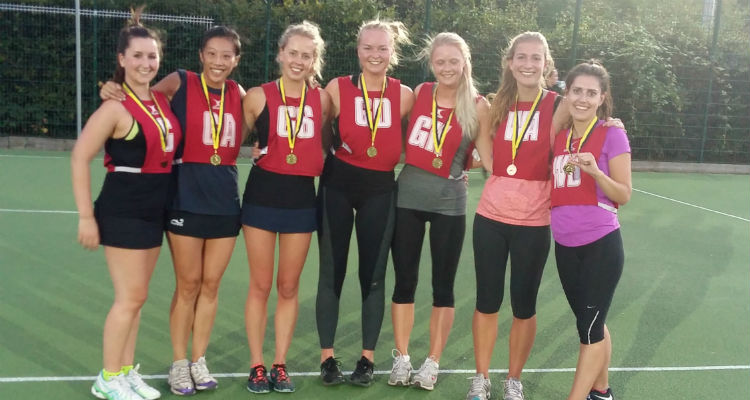
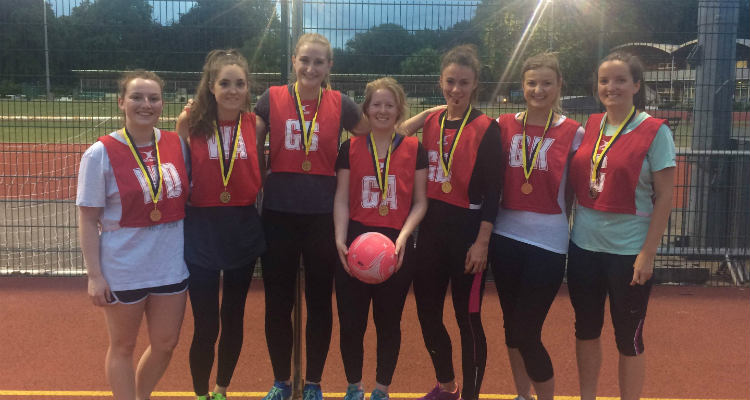
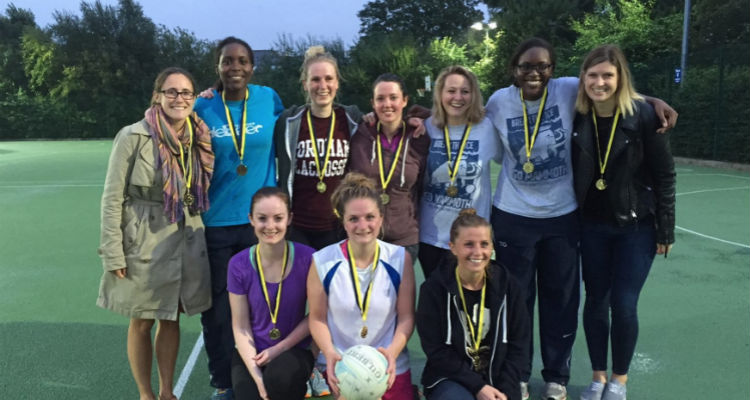
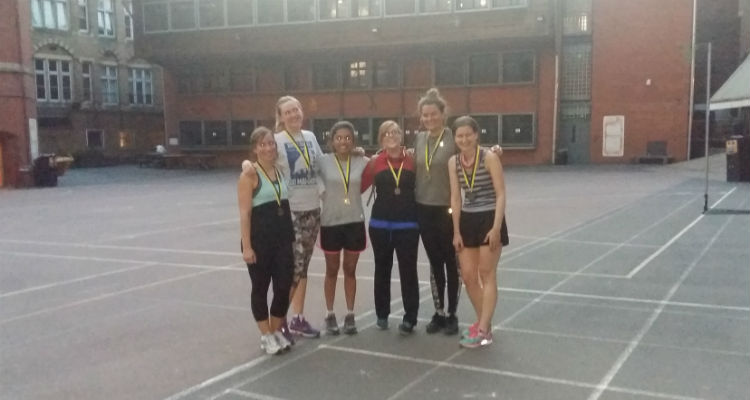
Below are photos netball league winners from August 2016. If we aren’t proudly displaying and your team has won a netball league this month drop us a comment on our Facebook page.
Clapham League – Bikini Bodies
Battersea Park – Battersea Babes
Clapham League – Quality Feet
Victoria – Big Ballzer
Ready to play netball or sign up with another season with Go Mammoth?
Well if you’re signing up for our recreational league, this little guide is for you. This applies to netball London and all other regions. Remember, in our recreational league, fitness levels and experience aren’t as important as team spirit, fitness and morale (perhaps followed by a cheeky gin & tonic after the game!).
DEFENDING POSITIONS
Goalkeeper
Goalkeepers are often taller and slightly more physical players, who are prepared to aggressively protect their goal post! They have to stay alert so they can collect rebounds off the post and intercept passes, therefore having fast reactions is often vital. It is important for the Goalkeeper to be aware of what is happening out in front of them. This will allow them to read the attacking team’s movements and anticipate any interceptions, creating turnovers.
Goal Defence
The Goal Defence works closely with the goal keeper, they must support each other. GD players must have good skills of anticipation so they can block passes and get the ball out to their own attacking players. If you can read the game well, spot opposition passes before they’re played and are alert to ball interceptions, this position is for you. The GD has more available space on court to play the ball than the GK, so should have decent stamina. As well as defending, they also need the skills of an attacker. The GD must initiate the attack by successfully getting the ball out of the defensive third, and assist the team in moving the ball down the court.
Wing Defence
As well as getting the ball forward, players in the Wing Defence position have to mark their opposing wing attack. The wing defence must be focused on the attacking opponents game play and good at controlling the ball. They should be ready at all times to pick up any tips or interceptions created by the circle defenders as well as playing a supporting backup role for the attackers down court.
Check out our defence training drill below:
MID-COURT & ATTACKING POSITIONS
Centre
The Centre is the engine of the team and they have to be quick thinking and creative with their play. Centre players manipulate how the game is played, regarding spacing, speed and structure. Centre players are normally the swiftest and fastest on the court, meaning they are quite often among the smallest players on the team with a lower centre of gravity. They usually receive the most passes than any other players on court and often receive low quick passes which makes it challenging for the taller defending players to get low and catch or intercept the ball.
Wing Attack
The Wing Attack is the Centre’s wing man! They must have a solid passing game and ball collecting skills. The WA is often the first person to receive the ball after the centre pass so needs to be quick off their feet from a stand still position. Speed is highly important for a Wing Attack as quick reactions are needed to receive the initial pass from the Centre is essential, as the Wing Attack needs to beat the opposing Wing Defence off the mark so the ball is not turned over. A Wing Attack needs the ability to open up space on the court so this position suits agile, speedy players.
SHOOTING POSITIONS
Goal Shooter
The goal shooter must have precise and direct shooting skills from a variety of positions within the circle. Once the ball is inside the circle, the GS must work hard to secure a goal. They must also be able to react quickly, dealing with quick passes into the circle and alert to claim rebounds if one of the shooters are to miss. Goal shooters seem to have the steadiest hands on the court and are often among the taller players. Goal shooters are often calm individuals that do not succumb to pressure as at many points in the game; all eyes are on you!
Goal Attack
The goal attack must have both strong shooting abilities and strong post approach play. The goal attacks main duty is to work with the Wing Attack and Centre to bring the ball closer to the post and if possible to the Goal Shooter. Their passing must be quick and direct to give the shooter the best opportunity to score before the defenders have caught up. They must also be able to read the two circle defenders and plan the best route into the circle. As well as this, they must have extremely quick reactions to ensure they have a second shot on goal if there are any rebounds. The GA is often a taller, slightly more agile player with high stamina, yet technically skilled.
Check out our “how to shoot” video below:
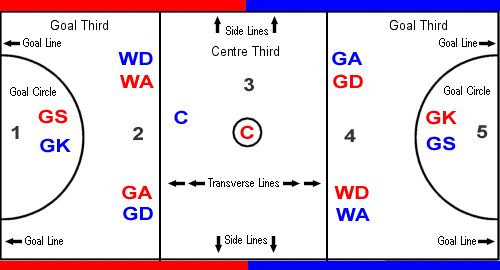
POSITION RESPONSIBILITIES ON THE COURT
Red team position: Goal Shooter (GS) Court Area: 1 & 2
Responsibility: To score goals and to work in and around the circle with your Goal Attack
Red team position: Goal Attack (GA) Court Area: 1,2 & 3
Responsibility: To feed and work with your Goal Shooter and to score goals.
Red team position: Wing Attack (WA) Court Area: 2 & 3
Responsibility: To feed your circle players giving them shooting opportunities.
Red team position: Centre (C) Court Area: 2, 3 & 4
Responsibility: To take the Centre Pass and to be the link between your defence and the attack.
Red team position: Wing Defence (W) Court Area: 3 & 4
Responsibility: To look for interceptions and to prevent the opposing Wing Attack from feeding players in your goal circle.
Red team position: Goal Defence (GD) Court Area: 3, 4 & 5
Responsibility: To win the ball and reduce the effectiveness of the opposing Goal Attack
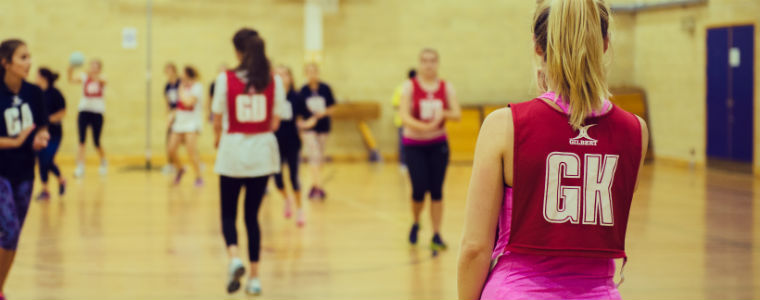
Red team position: Goal Keeper (GK) Court Area: 4 & 5
To work with your Goal Defence and to prevent the opposing Goal Shooter from scoring goals
—
So you’ve found your position and you’ve brushed up on the rules of netball. Are you ready to play? Cool! Find a league in your area below:
🍪 We use cookies to help give you the best service, personalise content and ads and analyse our traffic. For more details, please see our cookie policy.
This website uses cookies to improve your experience while you navigate through the website. Out of these, the cookies that are categorized as necessary are stored on your browser as they are essential for the working of basic functionalities of the website. We also use third-party cookies that help us analyze and understand how you use this website. These cookies will be stored in your browser only with your consent. You also have the option to opt-out of these cookies. But opting out of some of these cookies may affect your browsing experience.
Necessary cookies are absolutely essential for the website to function properly. These cookies ensure basic functionalities and security features of the website, anonymously.
Cookie
Duration
Description
cookielawinfo-checkbox-analytics
11 months
This cookie is set by GDPR Cookie Consent plugin. The cookie is used to store the user consent for the cookies in the category "Analytics".
cookielawinfo-checkbox-functional
11 months
The cookie is set by GDPR cookie consent to record the user consent for the cookies in the category "Functional".
cookielawinfo-checkbox-necessary
11 months
This cookie is set by GDPR Cookie Consent plugin. The cookies is used to store the user consent for the cookies in the category "Necessary".
cookielawinfo-checkbox-others
11 months
This cookie is set by GDPR Cookie Consent plugin. The cookie is used to store the user consent for the cookies in the category "Other.
cookielawinfo-checkbox-performance
11 months
This cookie is set by GDPR Cookie Consent plugin. The cookie is used to store the user consent for the cookies in the category "Performance".
viewed_cookie_policy
11 months
The cookie is set by the GDPR Cookie Consent plugin and is used to store whether or not user has consented to the use of cookies. It does not store any personal data.
Functional cookies help to perform certain functionalities like sharing the content of the website on social media platforms, collect feedbacks, and other third-party features.
Performance cookies are used to understand and analyze the key performance indexes of the website which helps in delivering a better user experience for the visitors.
Analytical cookies are used to understand how visitors interact with the website. These cookies help provide information on metrics the number of visitors, bounce rate, traffic source, etc.
Advertisement cookies are used to provide visitors with relevant ads and marketing campaigns. These cookies track visitors across websites and collect information to provide customized ads.